


Inguinoscrotal Herniation of the Urinary Bladder Presenting with Obstructive Uropathy: A Rare but Important Diagnostic Consideration
DOI:
https://doi.org/10.14740/wjnu1062Keywords:
Inguinoscrotal bladder hernia, Scrotal cystocele, Obstructive uropathy, Acute kidney injury, Bilateral hydronephrosis, Inguinal hernia repair, Computed tomography, Mesh hernioplastyAbstract
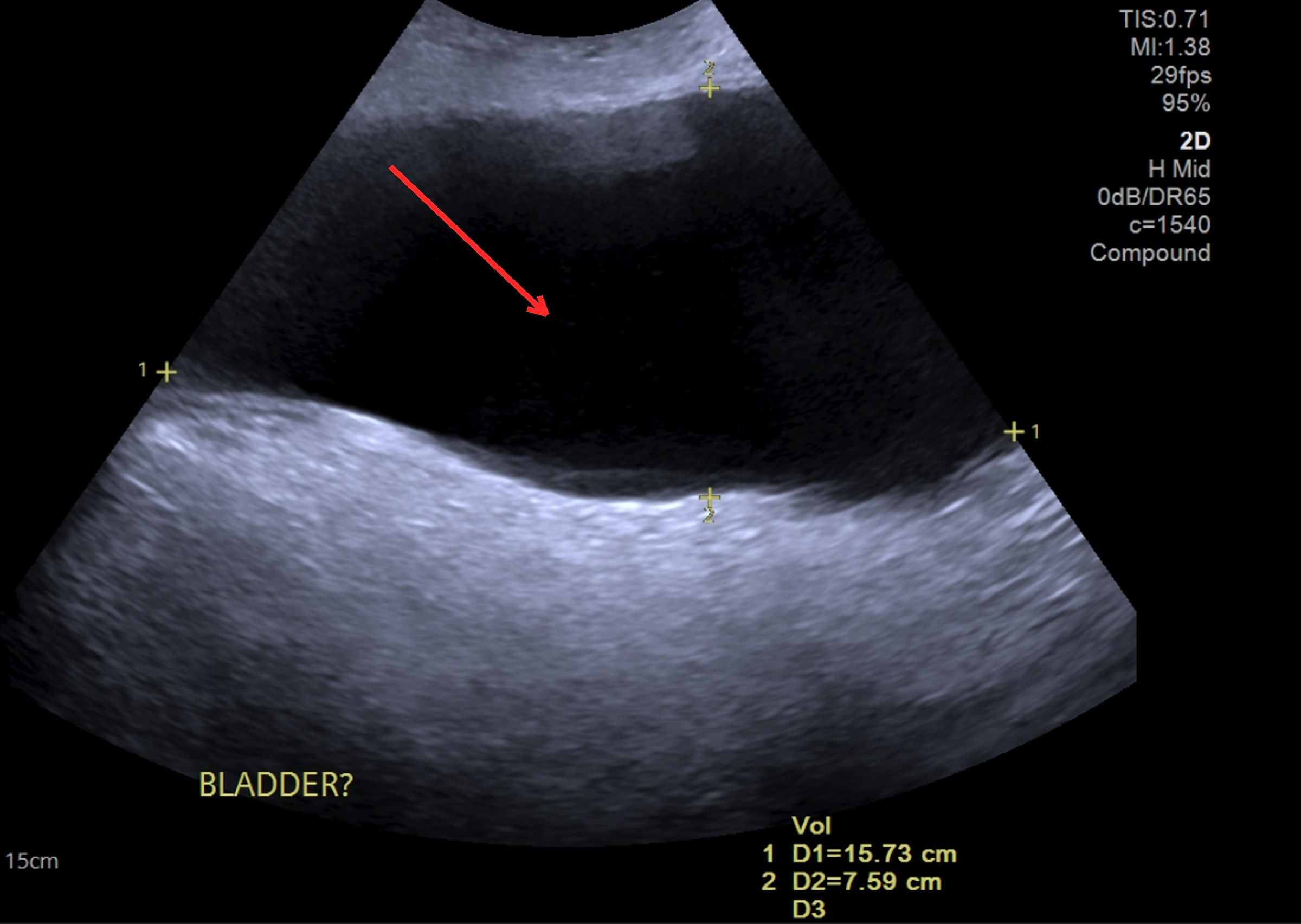
Bladder involvement within an inguinal hernia is rare, present in fewer than 4% of cases, and is seldom recognised before operation. When the herniated segment is large it can produce serious morbidity, including obstructive uropathy and deteriorating renal function, so timely recognition is important both to avoid intraoperative bladder injury and to reverse renal compromise. We report a 71-year-old man with a longstanding right scrotal swelling, nocturnal urinary leakage, an obligatory seated voiding posture, and rapidly worsening renal function. Ultrasound demonstrated a large pelvic fluid collection extending into the scrotum, and contrast-enhanced computed tomography (CT) confirmed a right inguinoscrotal hernia containing most of the urinary bladder with bilateral ureteric compression at the vesicoureteric junctions and consequent hydronephrosis. The estimated glomerular filtration rate (eGFR) fell from 78 to 48 mL/min/1.73 m² with a corresponding rise in serum creatinine, indicating acute kidney injury. Urethral catheterisation drained a large residual volume, produced immediate decompression and a striking reduction in scrotal swelling, and served as a useful early diagnostic sign. The patient underwent urgent open right inguinal hernia repair; operative findings showed coexisting direct and indirect components, with the bladder lying within the direct defect. The bladder was reduced without resection, the posterior wall reconstructed, and a polypropylene mesh placed, with intraoperative cystography confirming bladder integrity. Recovery was uneventful and renal function had normalised by eight months with no recurrence. This case is instructive because it links a frequently overlooked anatomical problem to a reversible cause of renal failure, and it reinforces the value of CT in delineating hernia contents and protecting the bladder during repair. The principal learning points are to suspect bladder herniation in elderly, obese men with large inguinal hernias and atypical urinary symptoms such as positional voiding, to obtain CT when urinary features accompany a groin hernia, and to recognise that prompt decompression and repair can restore both urinary and renal function.
Published
Issue
Section
License
Copyright (c) 2026 The authors

This work is licensed under a Creative Commons Attribution 4.0 International License.