Organ-Preserving Chemoradiotherapy and Successful Metastasectomy in a Rare Epithelioid Leiomyosarcoma of the Prostate
DOI:
https://doi.org/10.14740/wjnu1058Keywords:
Chemoradiotherapy, Epithelioid leiomyosarcoma, Jejunal leiomyosarcoma, Metachronous metastasis, Prostate, Pulmonary metastasis, Sarcoma, ImmunohistochemistryAbstract
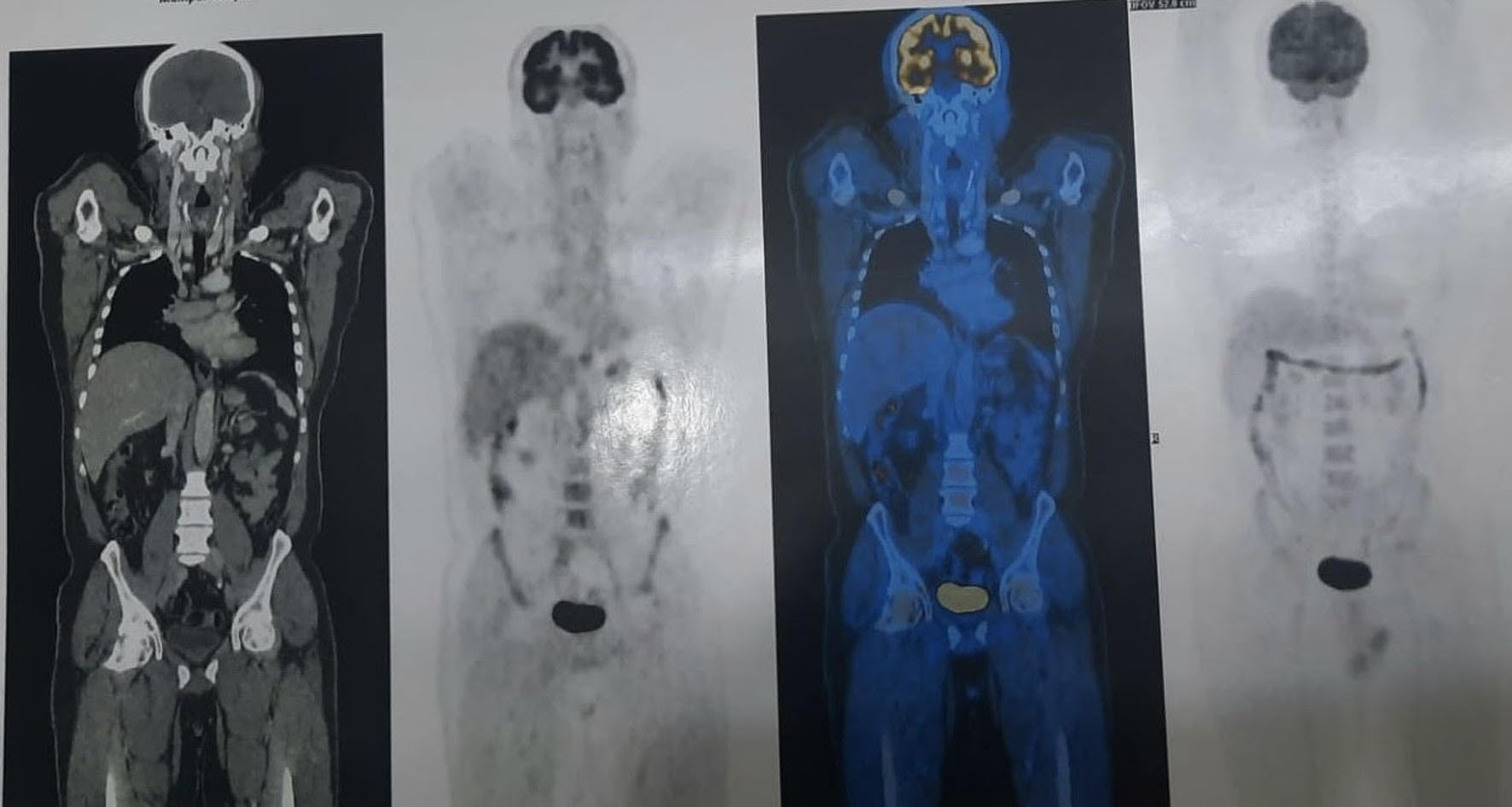
Epithelioid leiomyosarcoma is an aggressive soft tissue sarcoma derived from smooth muscle cells, typically arising from uterine, gastrointestinal, or deep soft tissue sites. Its primary occurrence in the prostate is rare, accounting for less than 0.1% of primary prostate malignancies. We present a case report of a 46-year-old male who presented with burning micturition, intermittent hematuria, and pelvic pain as his primary concerns. He had a cystic–solid mass centered at the left prostatic–urethral junction. Imaging studies, including ultrasound, contrast-enhanced computed tomography (CT), magnetic resonance imaging (MRI), and positron emission tomography-CT (PET-CT), revealed a heterogeneous lesion abutting the bladder base and the rectum without overt invasion. Transrectal biopsy with immunohistochemistry confirmed high-grade epithelioid leiomyosarcoma of the prostate, with tumor cells positive for vimentin, smooth muscle actin, calponin, desmin, and H-caldesmon, and negative for cytokeratin 5/6, P63, melanocytic and vascular markers. These findings were consistent with smooth muscle differentiation, effectively ruling out sarcomatoid carcinoma and melanoma. The patient received neoadjuvant chemotherapy with ifosfamide and doxorubicin, followed by definitive external beam radiotherapy with volumetric modulated arc therapy (VMAT). The treatment achieved a complete metabolic response, as evidenced by post-treatment PET-CT without the need for radical surgery. At 1-year follow-up, the patient presented with acute intestinal obstruction and jejunal leiomyosarcoma (grade 2) with a high proliferative index. Staging PET-CT also demonstrated a right lung nodule, which was confirmed cytologically as metastatic spindle cell sarcoma. He was treated with gemcitabine–docetaxel chemotherapy and video-assisted thoracoscopic right lung lobectomy. He remained well at the most recent follow-up with no clinical evidence of recurrent or metastatic disease. This case is unique for demonstrating that primary epithelioid leiomyosarcoma of the prostate can achieve a complete metabolic response with chemoradiotherapy alone, avoiding upfront radical prostatectomy, an organ-preserving outcome rarely described for this tumor, even after later metachronous jejunal and pulmonary metastases, which were successfully controlled with systemic therapy and metastasectomy. It underscores the aggressive metastatic behavior of prostatic leiomyosarcoma, the potential role of neoadjuvant chemotherapy and radiotherapy in organ preservation, and the value of ongoing surveillance for late, metachronous metastatic disease. The key learning points include recognizing atypical presentations of prostatic sarcoma, the role of multimodal therapy for local control, and individualizing surgical management of metachronous metastases.
Published
Issue
Section
License
Copyright (c) 2026 The authors

This work is licensed under a Creative Commons Attribution-NonCommercial 4.0 International License.