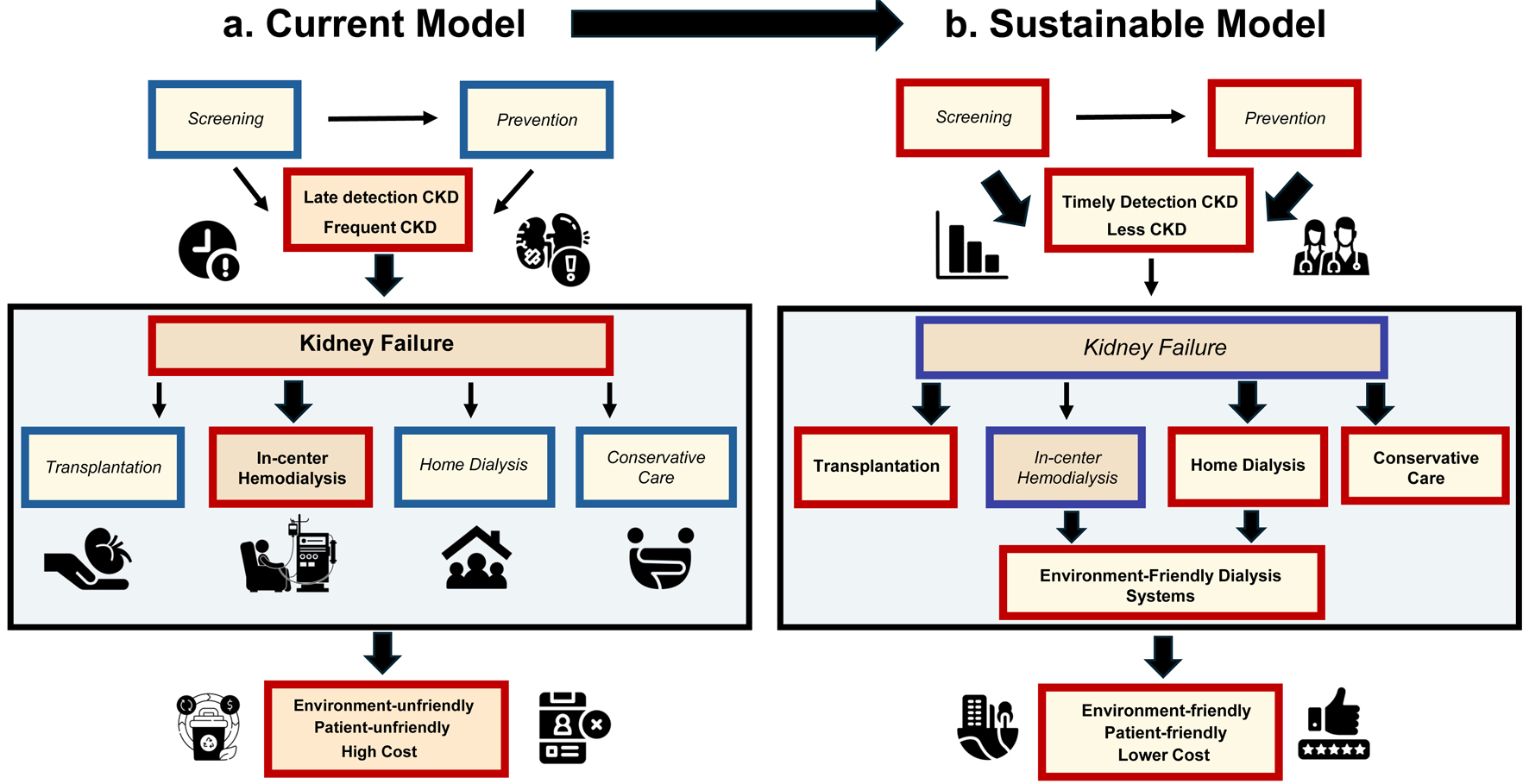
| Prevention | People with diabetes | - Timely diagnosis
- Adequate treatment |
| People with hypertension | - Timely diagnosis
- Adequate treatment |
| Lifestyle errors jeopardizing kidney function | - Promote healthy lifestyle and offer advice for correction (e.g., no smoking, sedentarism, nutrition errors, and alcohol consumption)
- Limit exposure to nephrotoxins
- Health-promoting taxation (e.g., salt, sugar, or fat taxes)
- Education campaigns |
| Unfavorable living conditions; difficulties to reach quality care | - Correct living conditions (e.g., social measures to reduce insufficient cooling of buildings, food insecurity, and poverty)
- Correction of inequities (e.g., ethnic/gender disparities [gender refers to social or cultural rather than biological identity], health illiteracy, discrimination, and disadvantages of remote areas) |
| Early detection | People with risk factors of CKD General population aged > 45 years | - Urine testing
- Albuminuria testing
- Screa/eGFR
- Screening for CKD risk factors (mainly hypertension, diabetes, cardiovascular disease, and obesity)
- Education of public and caregivers
- Ensure that appropriate therapy reaches all valid candidates |
| Environmental kidney threats | Global warming | - Urgent: decrease GHG emission
- Adapt working conditions (adapt hydration and protection against pollution and nephrotoxins)
- Adapt living conditions (building cooling and greenery) |
| Floods, hurricanes, and typhoons | - Urgent: decrease GHG emission
- Prevent floods
- Avoid diseases propagated by floods (e.g., malaria and dengue)
- Ensure safe water storage
- Forestall water contamination risks in flood-prone areas |
| Fine particulate matter pollution | - Decrease and prevent generation of fine particulate matter (industry, transport, and forest fires)
- Minimize pollution and particulate matter release |
| Transplantation | Promotion of organ donation | - Provide clear guidelines on organ donation and transplantation
- Act against donor and recipient exclusion based on questionable criteria
- Stimulate application of all donor types (deceased, living, and after cardiac death)
- Promote preemptive transplantation
- Technical and institutional support on organization transplantation programs in areas with poor transplantation rates
- Guidelines on how to react to paid donation
- Education, press campaigns, and social media campaigns |
| Promotion of organ transplantation | - Provide clear guidelines on organization of organ donation and transplantation programs
- Technical and institutional support for organization transplantation programs
- Education
- Press and social media campaigns |
| Declining graft function over time, post-transplantation complications | - Research and innovation to improve graft longevity (e.g., organ preservation, immunosuppression, and antifibrosis approaches) |
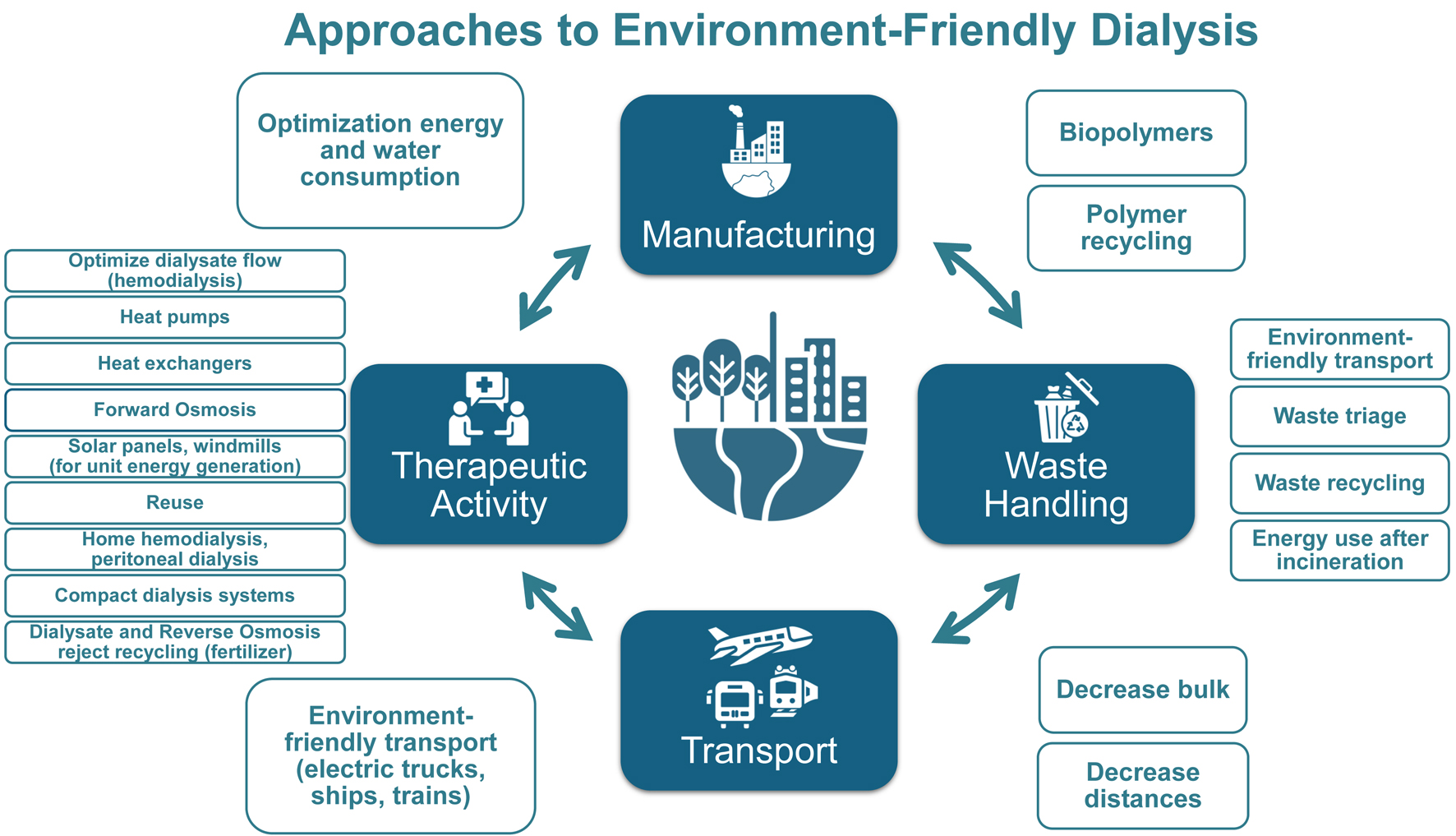
| Dialysis | Ecofriendly dialysisa | - Transparency about manufacturing and transport emissions
- Spent dialysate and RO reject recycling
- Decrease manufacturing and transport emissions
- Register and diminish emissions at unit level
- Recycling material
- Decrease water wastage
- Waste triage
- Peritoneal dialysis
- Home hemodialysis |
| Simpler and more compact dialysis systems | - Peritoneal dialysis
- Research and innovation |
| Comprehensive conservative care | Preserve quality of life, particularly in frail and elderly patients | - Discuss possibility of conservative care with patients
- Shared decision-making
- Awareness creation among candidates for KRT and health professionals |
| Patient empowerment | All people with CKD | - Promote correct and appropriate information delivery to all KRT candidates
- Shared decision-making
- Facilitate patient-friendly units and hospitals
- Nurse involvement in patient contacts
- Kidney care discussion groups
- Patient involvement in research and registries
- Patient training in communication skills |
| Kidney care in crises | All people with CKD All crisis situations All crisis-prone countries and regions | - Inclusion of kidney care in crisis preparedness plans
- Awareness creation among authorities
- Development of less resource-dependent therapies
- Development of own disaster preparedness plans if kidney care is excluded from official plans |
| Advocacy | Entire community involved in kidney care | - Awareness creation about kidney health and burden of kidney disease at all society levels
- Education and information |