World Journal of Nephrology and Urology, ISSN 1927-1239 print, 1927-1247 online, Open Access
Article copyright, the authors; Journal compilation copyright, World J Nephrol Urol and Elmer Press Inc
Journal website https://wjnu.elmerpub.com

Review

Volume 15, Number 2, April 2026, pages 26-41


Endocrine Disorders in Adults With End-Stage Renal Disease on Dialysis: A Review

Figures

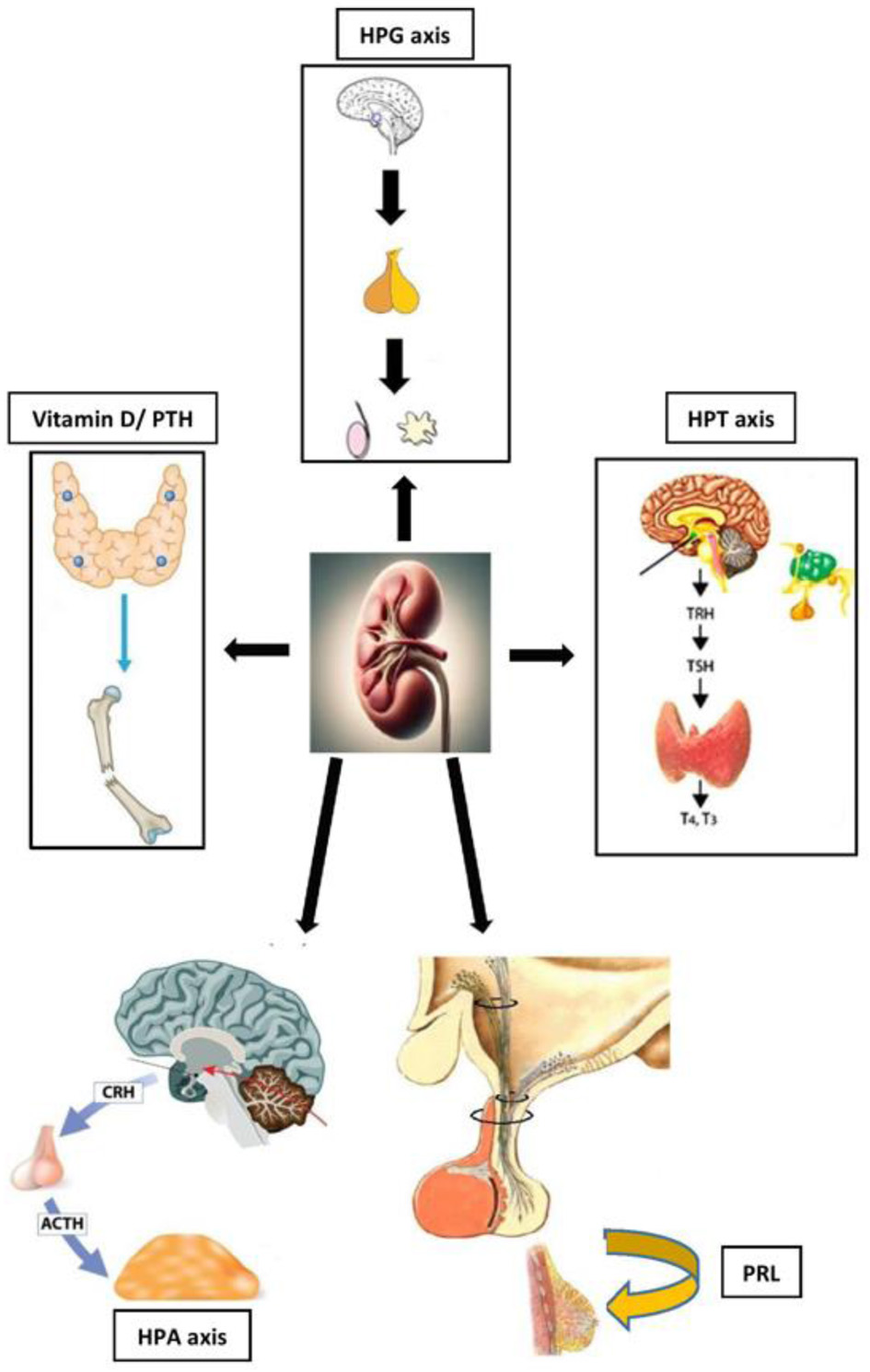
↓  Figure 1. Schematic representation of the interplay between kidney dysfunction in end-stage renal disease (ESRD) and major endocrine axes: hypothalamic–pituitary–gonadal (HPG), hypothalamic–pituitary–thyroid (HPT), hypothalamic–pituitary–adrenal (HPA), prolactin (PRL), and vitamin D/parathyroid hormone (PTH).
Figure 1.
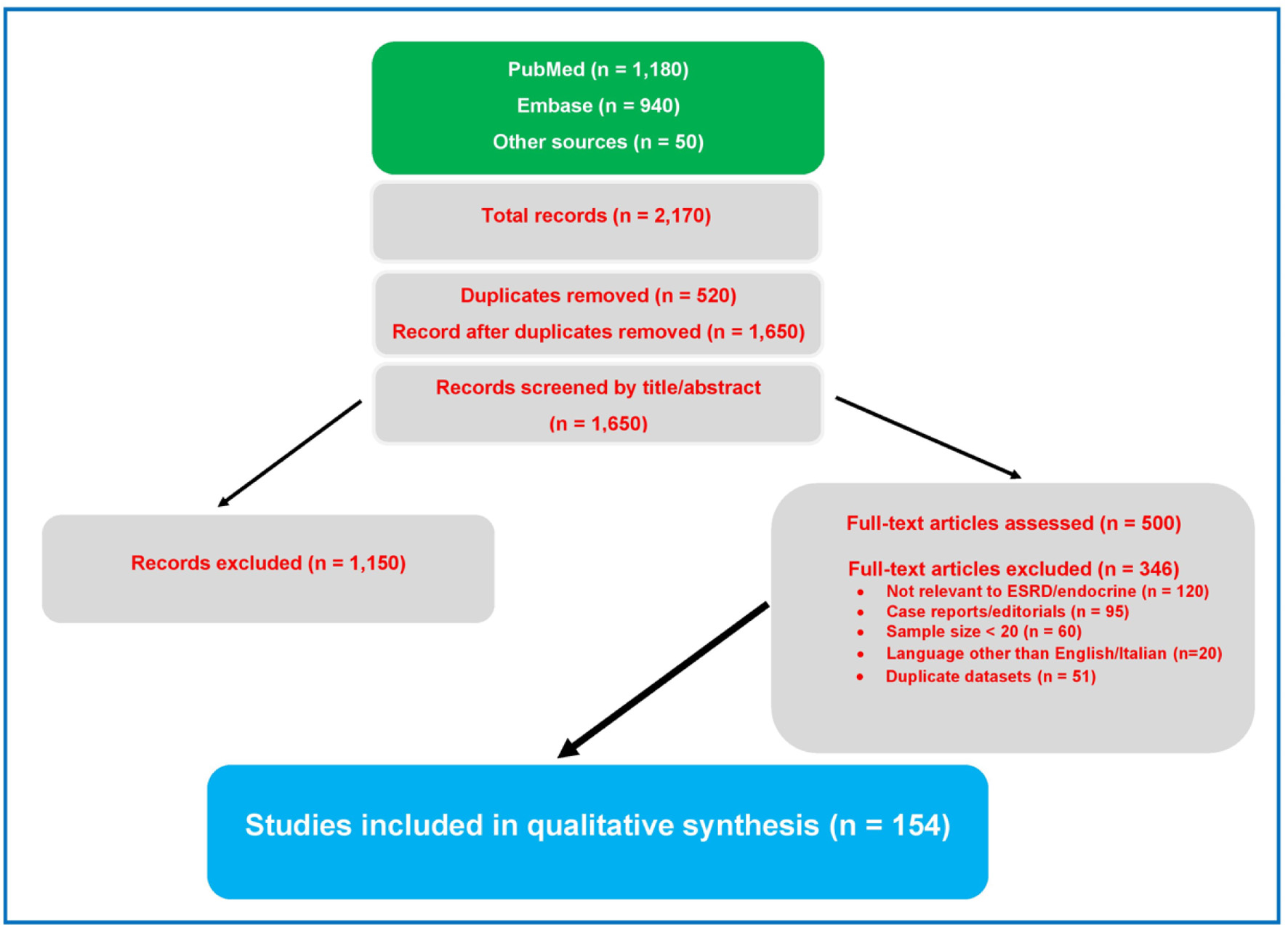
↓  Figure 2. PRISMA flow diagram of the study selection process. From 2,170 records initially identified, 1,650 remained after duplicate removal. Following title/abstract screening and full text assessment, 154 studies were included in the qualitative synthesis.
Figure 2.
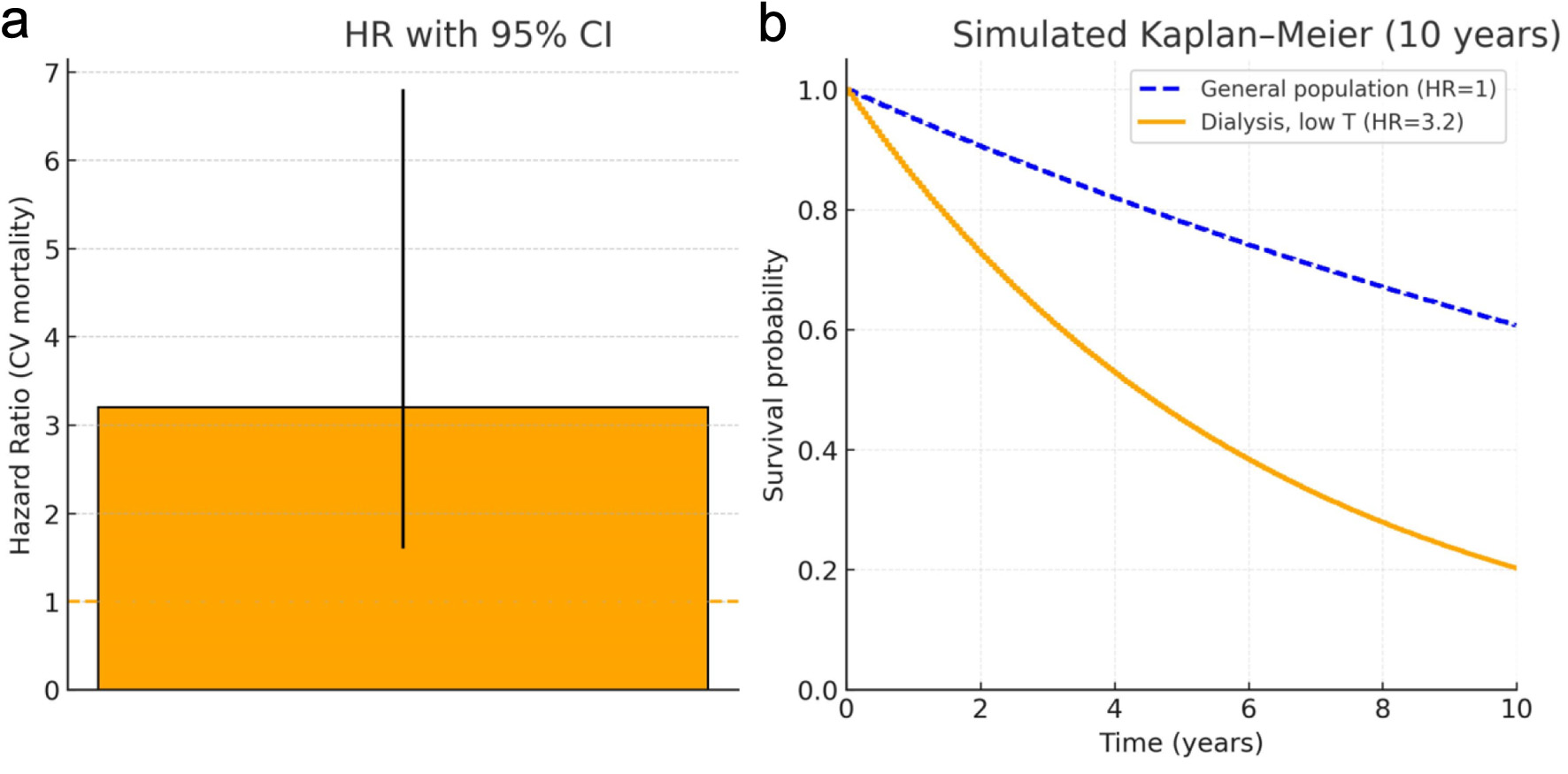
↓  Figure 3. Survival impact of low testosterone in dialysis patients. Low testosterone was defined as total testosterone < 10 nmol/L (< 288 ng/dL), according to the original criteria used by Carrero et al [37]. (a) Hazard ratio (HR) for cardiovascular mortality associated with low testosterone levels in dialysis patients, according to Carrero et al [37]. Reported HR = 3.2; 95% CI: 1.6–6.8 (Adapted/reproduced from Carrero et al [37] with permission where required). (b) Simulated Kaplan–Meier survival curves over 10 years comparing the general population (hazard ratio (HR) = 1, dashed blue line) and dialysis patients with low testosterone (HR = 3.2, solid orange line; derived from Carrero et al [37]). Curves are illustrative and generated from an exponential survival model using the reported HR value.
Figure 3.

Tables

↓  Table 1. Main Endocrine Alterations in Patients With ESRD
 
Hormone/axisDirection of changeMain mechanismsClinical consequences
CV: cardiovascular; ESRD: end-stage renal disease; LH: luteinizing hormone; FSH: follicle-stimulating hormone; PTH: parathyroid hormone; SHBG: sex hormone-binding globulin; TSH: thyroid-stimulating hormone.
Testosterone (men)Reduced LH/FSH secretion; chronic uremia; inflammation; ↑ SHBGHypogonadism; infertility; loss of muscle mass; decreased libido
Estrogens (women)Cyclic alterations; early menopauseHypothalamic-pituitary disorders; reduced hormonal clearanceMenstrual irregularities; amenorrhea; reduced fertility
ProlactinReduced renal clearance; hypothalamic dysfunctionGalactorrhea; gynecomastia; sexual dysfunction; increased CV risk
Thyroid hormones (FT3, FT4, TSH)T3 ↓ (low T3 syndrome); TSH normal or ↑Altered peripheral deiodination; chronic inflammationPoor prognosis; ↑ mortality; altered basal metabolism
Cortisol↑ or dysregulatedAltered clearance and circadian rhythmAltered glucose metabolism; ↑ CV risk
Vitamin D (calcitriol)Reduced renal 1α-hydroxylationRenal osteodystrophy; ↑ PTH; bone fragility
PTHSecondary hyperparathyroidismBone and CV alterations


↓  Table 2. Gender Differences in Endocrine Alterations in ESRD
 
AlterationMenWomenClinical implications
ESRD: end-stage renal disease; PTH: parathyroid hormone.
HypogonadismVery frequent (↓ testosterone)Less documented; lower prevalenceGreater impact on muscle mass and libido in men
Prolactin↑ (hypogonadism and sexual dysfunction)↑ (menstrual alterations, amenorrhea)Effects on fertility in both sexes
ThyroidLow T3 syndrome frequentSimilar frequencyAssociation with mortality regardless of sex
Vitamin D/PTHDeficiency and secondary hyperparathyroidism similarDeficiency and secondary hyperparathyroidism similarRenal osteodystrophy, fracture risk, vascular calcifications
Sexual quality of lifeDecreased desire, erectile dysfunctionDecreased sexual satisfaction, dyspareuniaSignificant psychological and relational impact